During Munich International Jewelry Week and the International Craft Fair Munich, Metal Art Campus Steneby is strongly represented across several major venues — demonstrating the programme’s international relevance and professional reach.
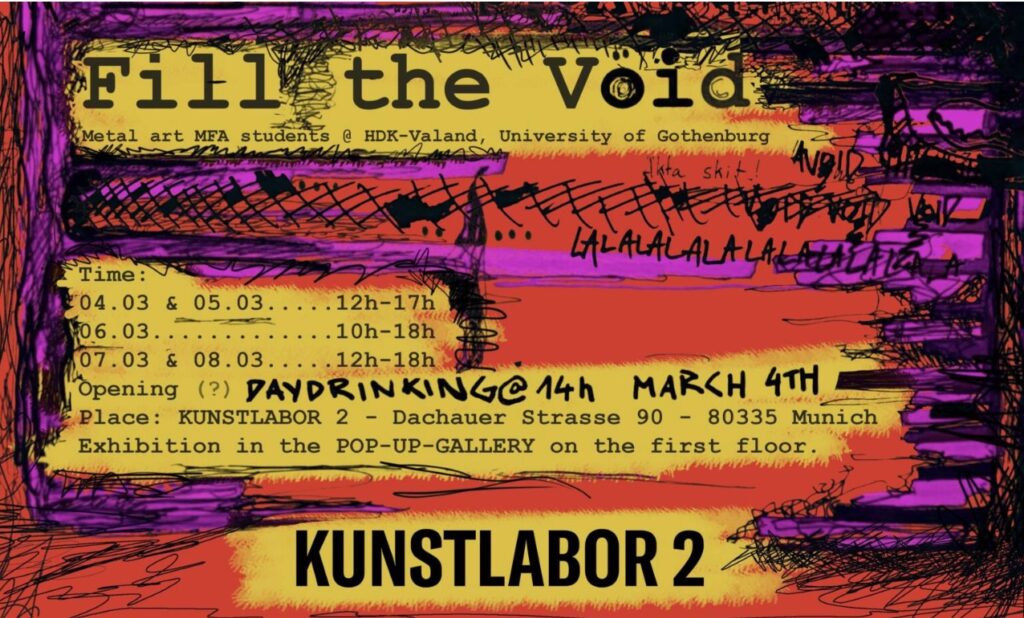
MFA students from Metal Art Campus Steneby present their exhibition :
FILL THE VOID
04-03-2026 – 08-03-2026
KUNSTLABOR 2
Dachauer Strasse 90
80335 München
During Munich Jewellery week
The exhibition link : https://schmuck-muenchen.org/en/schmuck-events/fill-the-void/
OBJEKT DISPUTE
Kunstgießerei München – OBJECT DISPUTE: Hecho en México – Hergestellt in Deutschland – Tillverkad i Sverige
Exhibition link : https://schmuck-muenchen.org/schmuck-events/object-dispute/
Metal Art Professor Heiner Zimmermann and Senior Lecturer Tobias Birgersson exhibit alongside Professor Jorge Manilla (Kunsthøgskolen i Oslo) at Kunstgießerei München. This collaboration highlights the dialogue between leading educational institutions and established practitioners in the field of metal art.
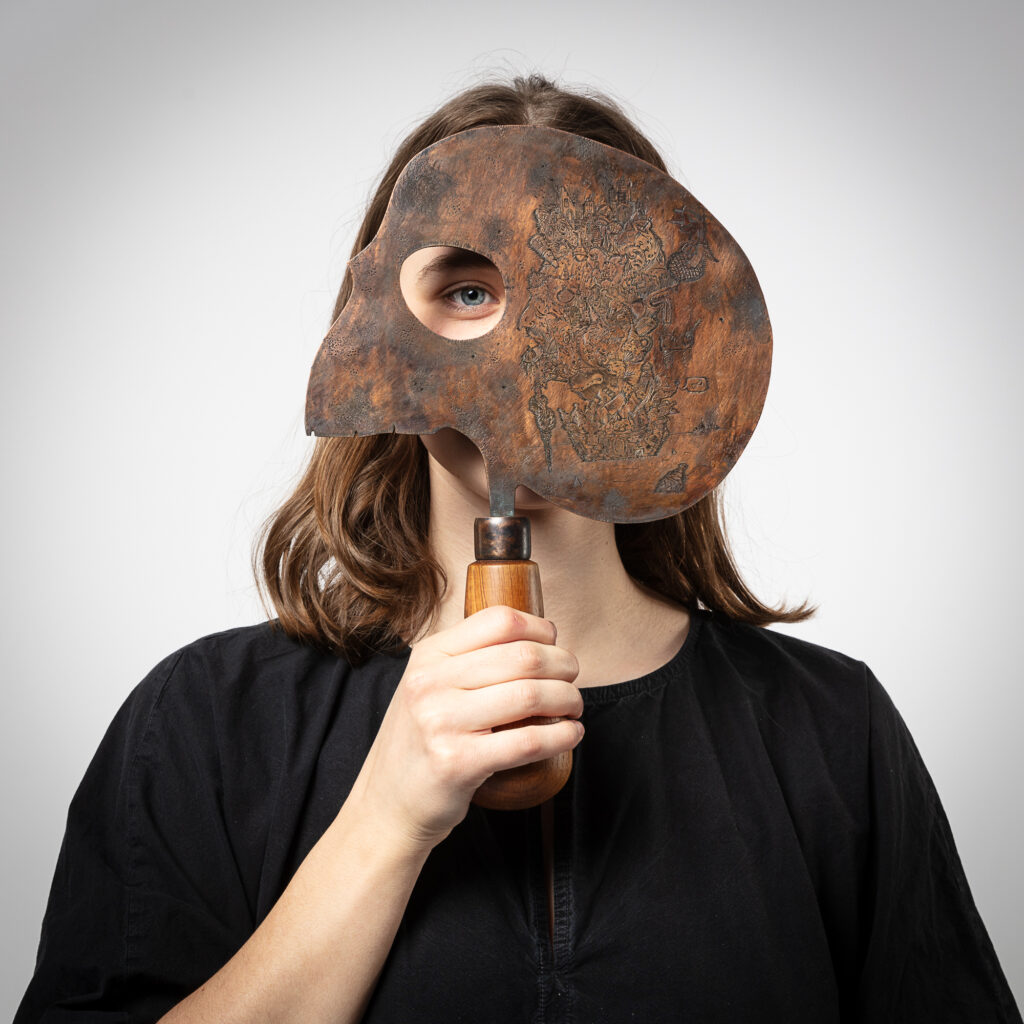
A round wooden handle, deftly turned on a lathe to soften the contours of the dowel and make it fit for holding, steering, conducting with the hand. But a handle for what? Attached to a metal piece reminiscent of, but clearly removed from, functionality. A piece that has been worked with the same level of craftsmanship as the handle, forged and hammered in the workshop, yet serving no obvious purpose.
Nothing so useless as a tool without a function, or the irony of workshop full of non-functional tools. Someone clever once wrote that an object’s thingness emerges once it loses its functionality.
Its opposite: a sharp wooden knife can still cut, still kill. Though a wooden blade seems to undermine the very essence of the knife as we know it: supposedly soft wood replacing hard hammered metall. Such a strung wooden piercer may once have represented the pinnacle of technology, and so the collection takes on a museological quality. But the careful onlooker will pick up on elements of contemporaneity, and question which knife might have carved the handles, let alone the wooden blades they are attached to. And how to manoeuvre a tool with an obstructive handle? The object’s status becomes disputed, and its thingness emerges.
Some of our earliest tools will have been made from bone. With innate qualities of hardness and malleability, it made for the perfect material for shaping into a piercing, cutting, sewing, hooking or scraping device. But here we see the merging of the ancient and the modern. From the primitive bone our most modern tools emerge. They are everyone’s tool, usually anonymous and ubiquitous. Yet here they remain not yet fully divorced from their origin and their material, retaining a uniqueness and an almost complete uselessness. They appear unfinished, in process, still becoming. But were they to be completed we’d have to conclude their equally useless character, with a few exceptions. Replacing these usually metal items with bone replicas is unlikely to produce an object worth using for its purpose as a tool.
Here, what is lost and what is gained differs from one object to the next. We have art acting as a tool, the tool acting as art, and the satirical tool, portraying tools but in such a way that its thingness emerges.
Who made these objects? They appear almost as marked tools, reminiscent of the near forgotten brick stamps and mason marks, reminding us of the maker. They speak to the craftsman’s relationship with their tools, their specificity. The blacksmith will furnish their workshop with tools they have made themselves. Each item crafted for the maker’s specific use and purpose.
With a product you write where it was made, whilst with art you write where the maker is from. Which should imply that it makes no difference if these objects were made in Mexico, Sweden or Germany. But there is a tension to these objects, their status is in dispute. Among the refuse and produce of the foundry, our objects make vain attempts at concealment. Hiding in plains sight they almost blend into the interior language of the workshop, as recently abandoned tools at the end of the workday.
Art, product, object, thing, tool.
Artist, producer, craftsman, maker, fool.
OBJECT DISPUTE brings together Jorge Manilla, Heiner Zimmermann, and Tobias Birgersson to explore objects that no longer align with their expected function. Each artist works where utility fades and categories—jewellery, tool, sculpture—begin to blur.
06-03-2026 – 08-03-2026
Kunstgießerei
Schleißheimer Str. 72
80797 München
Pinakothek der Moderne, Munich
Alumni and current graduating students from Metal Art Campus Steneby and Craft – Jewellery Art at HDK-Valand, Gothenburg University , exhibit together at the Pinakothek der Moderne with a collaborative gigantic necklace. This joint presentation underscores the strength of the educational environment and the continuity between student practice and professional development.
In 2026, Die Neue Sammlung – The Design Museum at the Pinakothek der Moderne in Munich will host the 1st International Summit of Jewelry Classes and Pop-up Exhibition as part of the broader city-wide Jewellery Week and craft programme. Under the roof of one of Europe’s largest museums for modern and contemporary art, design, architecture, and graphics, this summit brings together over 40 jewellery classes from around the world — representing more than 24 countries — in a specially curated pop-up exhibition. The event celebrates the future of young contemporary jewellery and takes place during Munich’s Jewellery Weekend, offering a unique platform for dialogue, education, and international exchange within the schmuck-münchen programme